
In the world of custom control arm fabrication and hardcore off-roading, suspension failure is not an option. Whether you are building a mega truck suspension to launch out of mud pits or designing rock crawler suspension parts to traverse the Hammers, the integrity of your rig comes down to the pivot points.
While factory rubber bushings offer comfort, they lack the articulation and strength required for extreme terrain. This is where the 1-1/4" x 12 Rod Ends (Heim Joints) dominate the landscape. As the bridge between your chassis and your axles, these heavy-duty rod ends are the industry standard for Ultra4 suspension parts and 1 ton steering upgrade projects.
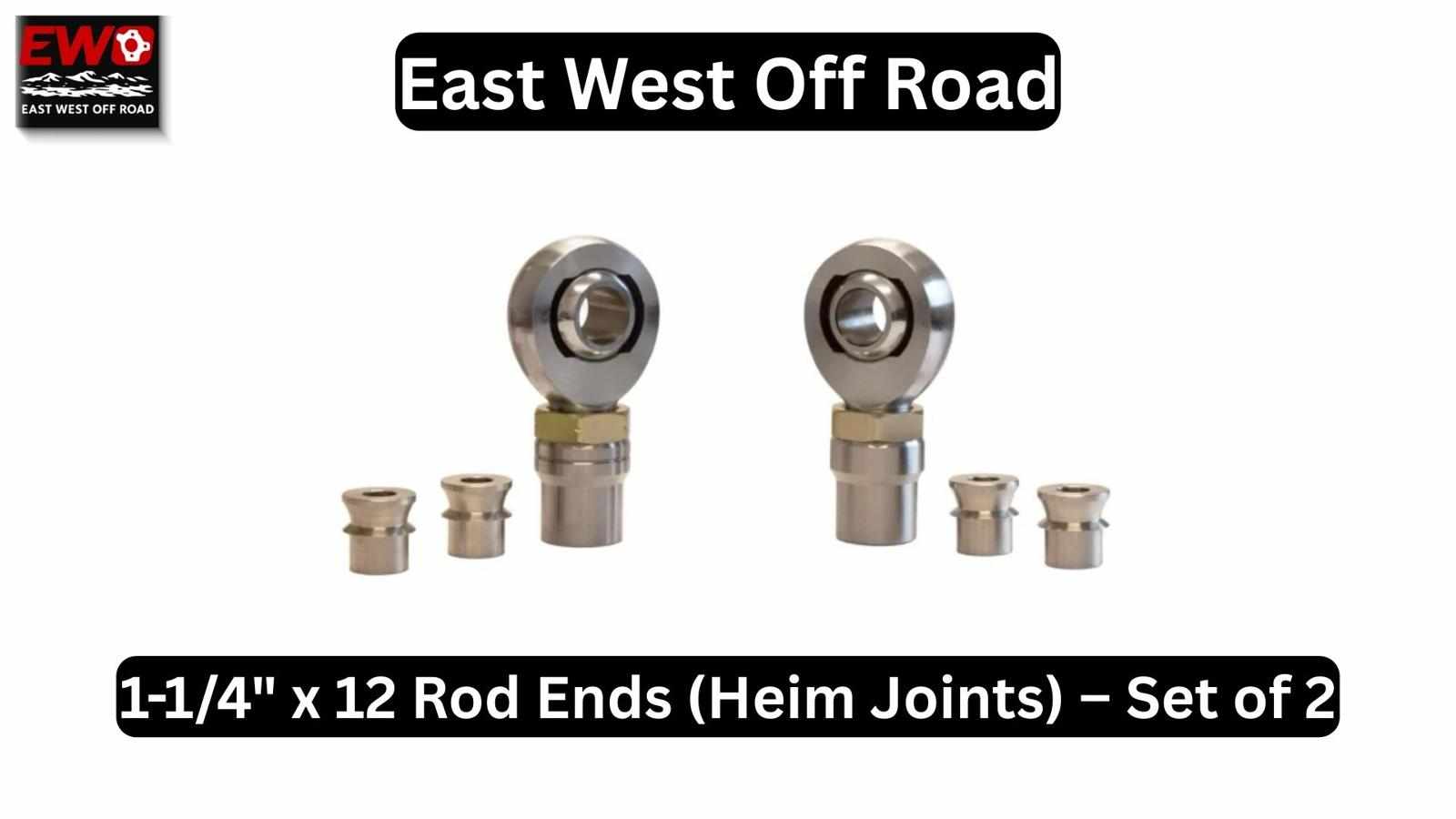
In this technical guide, we delve into the metallurgy, geometry, and installation best practices for 1.25 Heim Joint Kit systems, specifically looking at the engineering behind the (https://www.eastwestoffroad.com/product/1-14%22-x-12-rod-ends-(heim-joints)-set-of-2).
Engineering the Perfect Pivot: Materials and Specs
When you are shopping for performance parts, distinguishing between "strong" and "competition-grade" is vital. A generic agricultural joint cannot withstand the lateral forces of a triangulated suspension. You need hardware built from 4130 Chromoly rod ends.
The Core: 4130 Chromoly and Heat Treatment
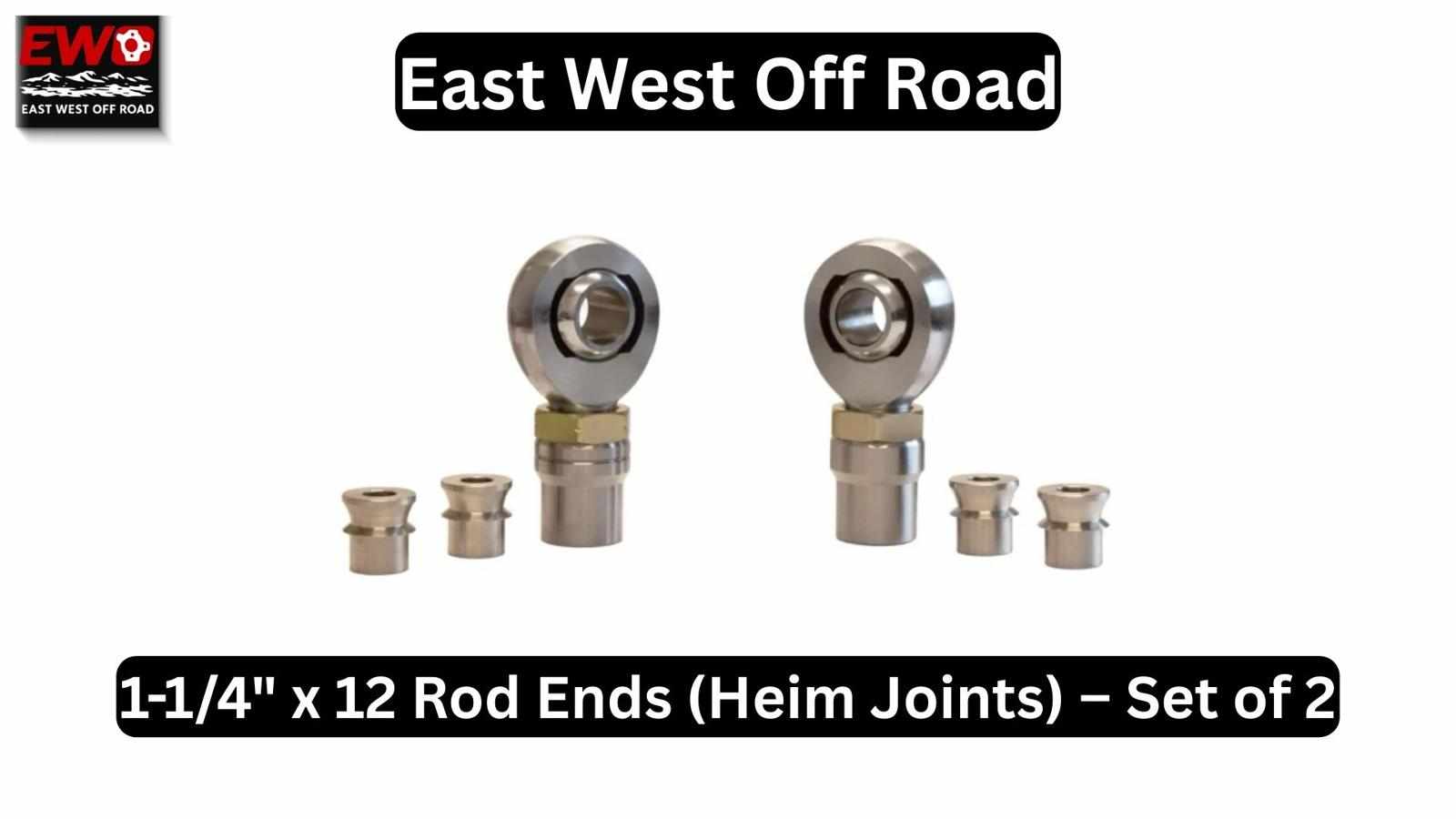
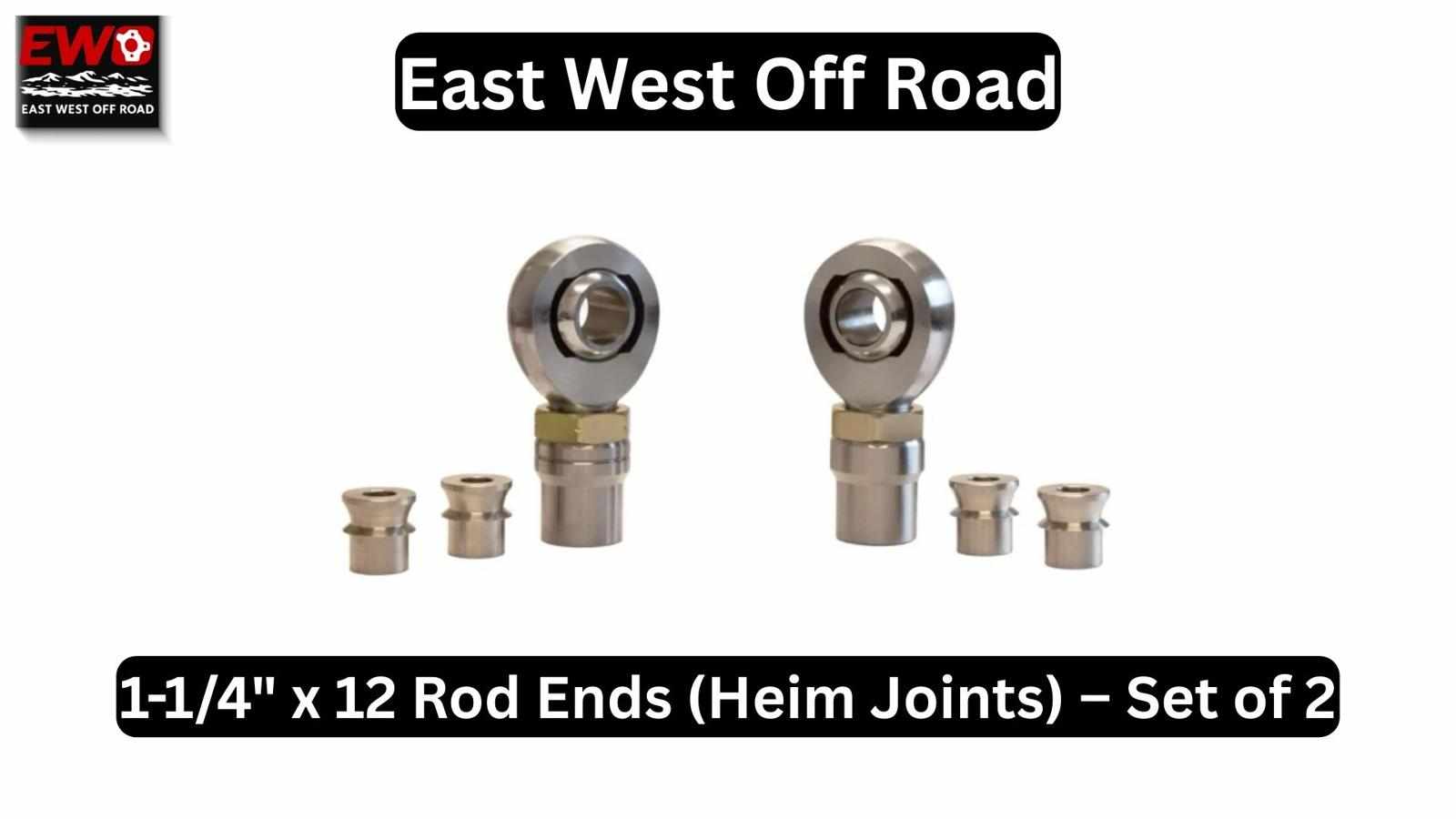
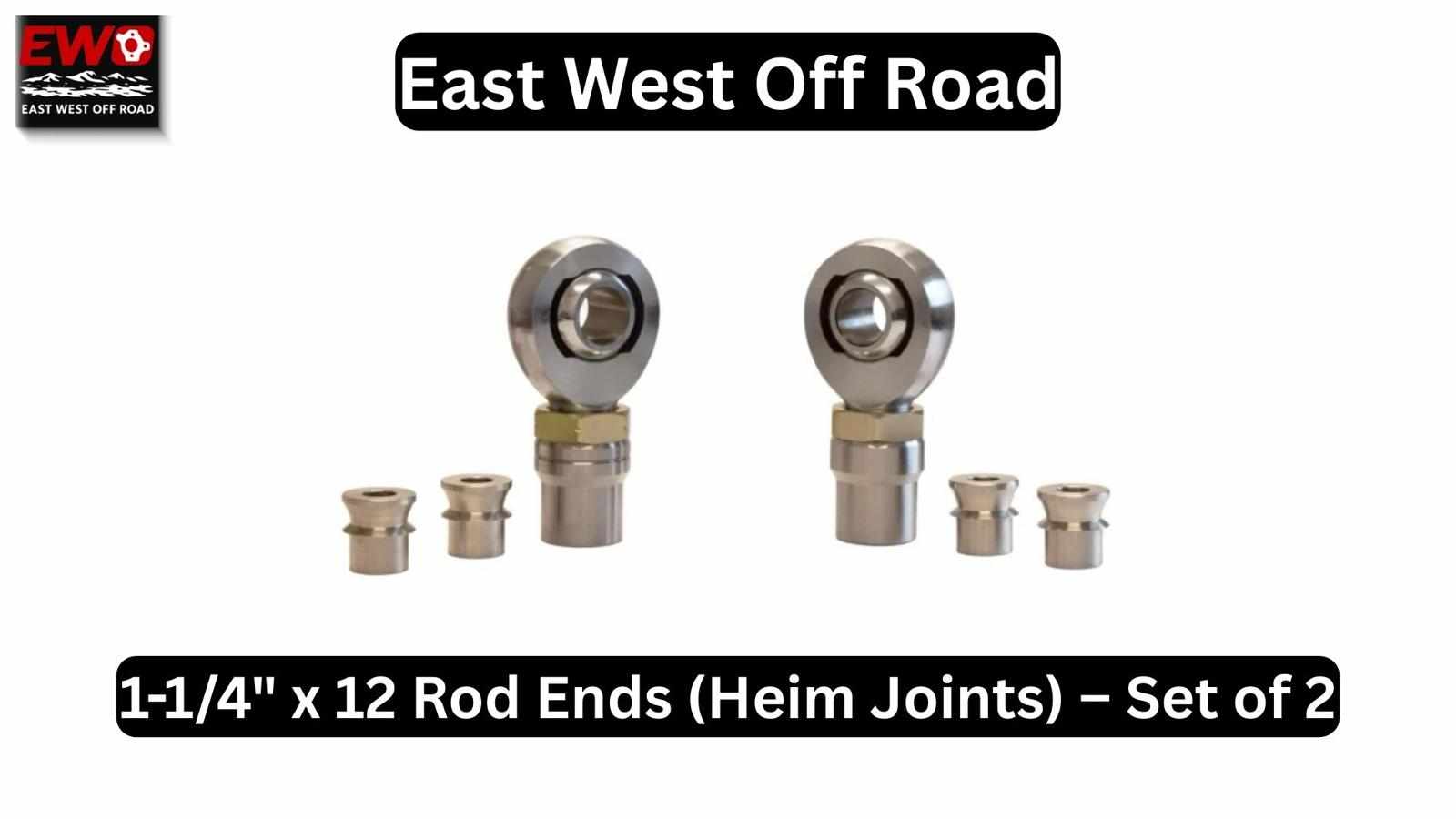
The EWO 1-1/4 rod ends (Model E63001 heim joint) are manufactured using heat treated heim joints technology. The housing is forged from 4130 Chromoly, a material renowned for its high strength-to-weight ratio. By heat-treating the steel, the radial load capacity rod end rating jumps significantly.
Load Rating: A premium 1.25 shank heim like this offers a 76000 lb static load heim capacity. This ensures that shock loads from jumping or crashing do not deform the housing.
The Ball: Inside the housing sits a 52100 bearing steel ball. This is hard chrome plated to create a polished rod end surface that rotates smoothly under immense pressure.
The Friction Interface: Teflon Kevlar Liners
Early generations of rod ends 1.25 shank 1 inch bore were metal-on-metal. They required constant greasing and would rattle audibly once worn. The modern solution is the Teflon Kevlar liner rod end. By injection molding a TEFLON KEVLAR liner (PTFE) between the race and the ball, manufacturers have created a self lubricating rod end. This liner acts as a wiper seal to keep dirt out and provides a cushioning effect, resulting in quiet rod ends that are essentially maintenance free heim joints. This technology allows you to run quiet off road joints on the street without the constant clunking associated with older race parts.
The Supporting Hardware Ecosystem
A 1-1/4" x 12 Rod Ends unit is only as good as the hardware that connects it to your vehicle. A proper rod end kit must include matched components to ensure safety.
Tube Adapters and Fabrication
To attach the joint to your links, you need tube adapters. These are machined from 1045 steel to ensure weldability and strength. For heavy-duty lower links, the standard is a 1.5 ID tube adapter, designed to slide perfectly into a DOM tube (Drawn Over Mandrel) with a 2-inch outer diameter and 0.250-inch wall thickness.
Weld in bung 1.25-12: These must be welded with deep penetration.
Hex vs. Round: A Hex tube adapter 1.5 inch allows you to use a large wrench to rotate the link for alignment, whereas a Round tube adapter 1.5 inch offers a cleaner, flush look.
Half Sets: Sometimes you might see a 1.25" Half Set Tube Adapter or short weld bung for tight clearance applications where a full-length insert won't fit.
Misalignment Spacers
To maximize articulation in a 4 link suspension kit DIY, you cannot bolt the 1-inch bore directly to a bracket. You need misalignment spacers. These inserts reduce the bore size to match your bolt (typically 9/16, 5/8, or 3/4 inch) and push the rod end body away from the bracket, allowing for greater angular movement.
Why Stainless? Always opt for stainless steel misalignment spacers. Cheaper zinc-coated spacers will rust after a few trail runs. A premium kit will offer stainless high misalignment options like 1"-9/16" Stainless Steel Spacers, 1"-5/8" Stainless Steel Spacers, or 1"-3/4" Stainless Steel Spacers.
Real-World Applications
Understanding where to utilize these 1 1/4" Heim joint systems helps in planning your build.
Steering Upgrades for 1-Ton Axles
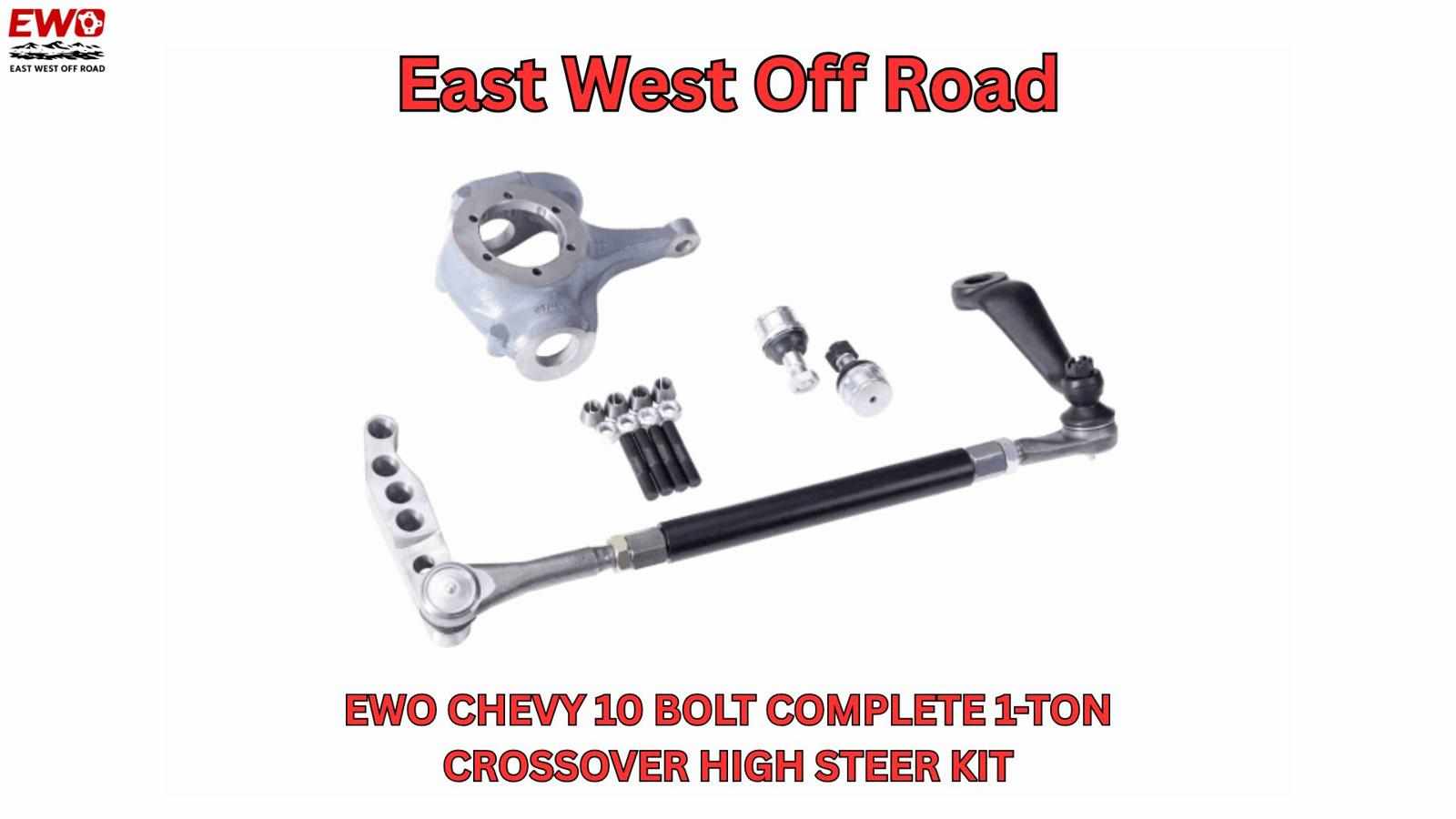
If you are performing a Dana 60 swap parts upgrade on a Jeep or buggy, stock tie rods are insufficient. A Dana 60 steering kit utilizing 1 1/4-12 LH and RH rod ends provides massive strength. This is the ultimate tie rod end replacement for rigs running 40-inch tires or hydraulic steering heims. The 1.25-12 UNF thread pitch is fine enough to prevent loosening but large enough to handle the force of a hydraulic ram.
Suspension Link Geometry
Whether building a 3 link suspension fabrication for the front or a rear 4-link, the 1-1/4" x 12 Rod Ends are the go-to for lower control arms. They allow for precise anti squat adjustment by threading the joint in or out.
Fixing Issues: Many Jeep owners use these heavy-duty joints to fix death wobble Jeep JK issues caused by worn track bar bushings. The rigidity of a structural rod end eliminates the lateral play that causes wobble.
Maintenance and Brand Comparison
When selecting parts, you will often see comparisons like Barnes 4WD vs EWO, RuffStuff heim joints vs EWO, or TMR Customs lifetime heims.
The EWO Advantage: East West Offroad reviews often highlight the value of their kits. By offering a complete 1-1/4 Heim Joints set of 2 that includes the RH Jam Nut, LH Jam Nut, RH Tube Adapter, and LH Tube Adapter, they simplify the buying process.
Community: Joining the EWO ARMY gives fabricators access to EWO Army discount codes and specific East West Offroad shipping benefits.
Essential Maintenance Tips
Keep Jam Nuts Tight: The most common failure is a loose 1-1/4 jam nut left hand or right hand. Use a large pipe wrench or a specialized jam nut wrench to torque them down.
Cleaning: Cleaning rod ends is easy—just rinse with water. Do not use high-pressure grease; these are Teflon lined heims, so greasing heim joints can actually attract abrasive grit. Use a dry PTFE spray for teflon liner care.
Inspection: Regularly check for squeaky suspension joints. If a joint squeaks, the liner may be worn, and it is time to replace worn rod ends.
Conclusion
Building a capability-driven rig requires parts that don't compromise. The (https://www.eastwestoffroad.com/product/1-14%22-x-12-rod-ends-(heim-joints)-set-of-2) offers the corrosion resistant heim joint durability and 76,800 lbs strength rating required for modern rock crawler suspension parts.
Whether you are looking for Canadian off road parts, US made rod ends, or simply the strongest tie rod ends available, upgrading to 4130 Chromoly is an investment in confidence. Stop worrying about bending a link and start focusing on the line ahead.

Write a comment ...