
If you are planning a 4 link suspension kit DIY project or upgrading the steering on a one-ton axle swap, you have likely realized that not all rod ends are created equal. The market is flooded with terminology—static load ratings, liners, races, and misalignment angles. Making the wrong choice can lead to a broken link on the trail or dangerous death wobble on the highway.
For serious rock crawler suspension parts, the industry standard has settled on the 1-1/4" x 12 Rod End (often called the 1.25 Heim Joint). But what makes this specific size and specification the go-to for mega truck suspension and Ultra4 rigs?
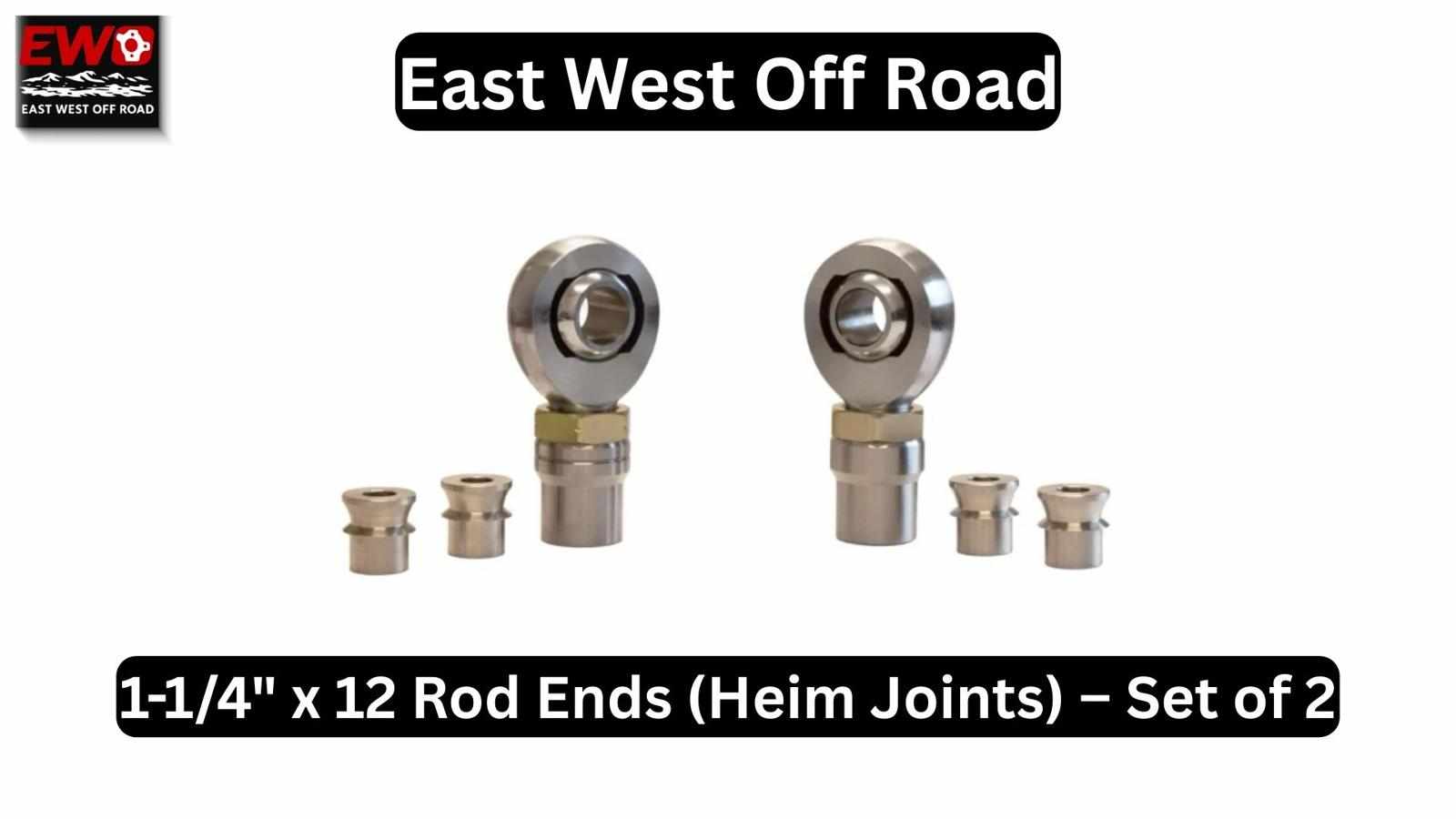
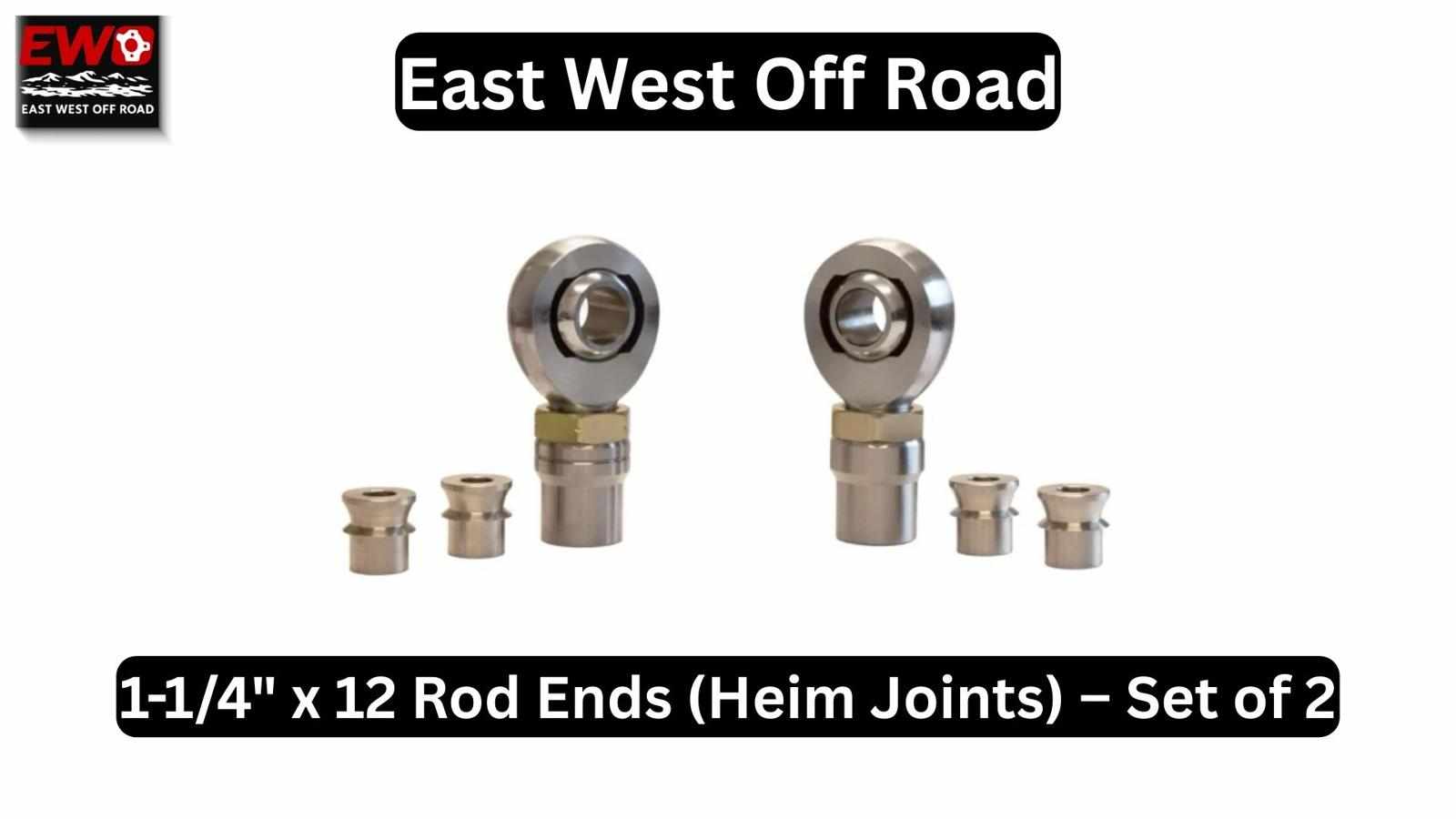
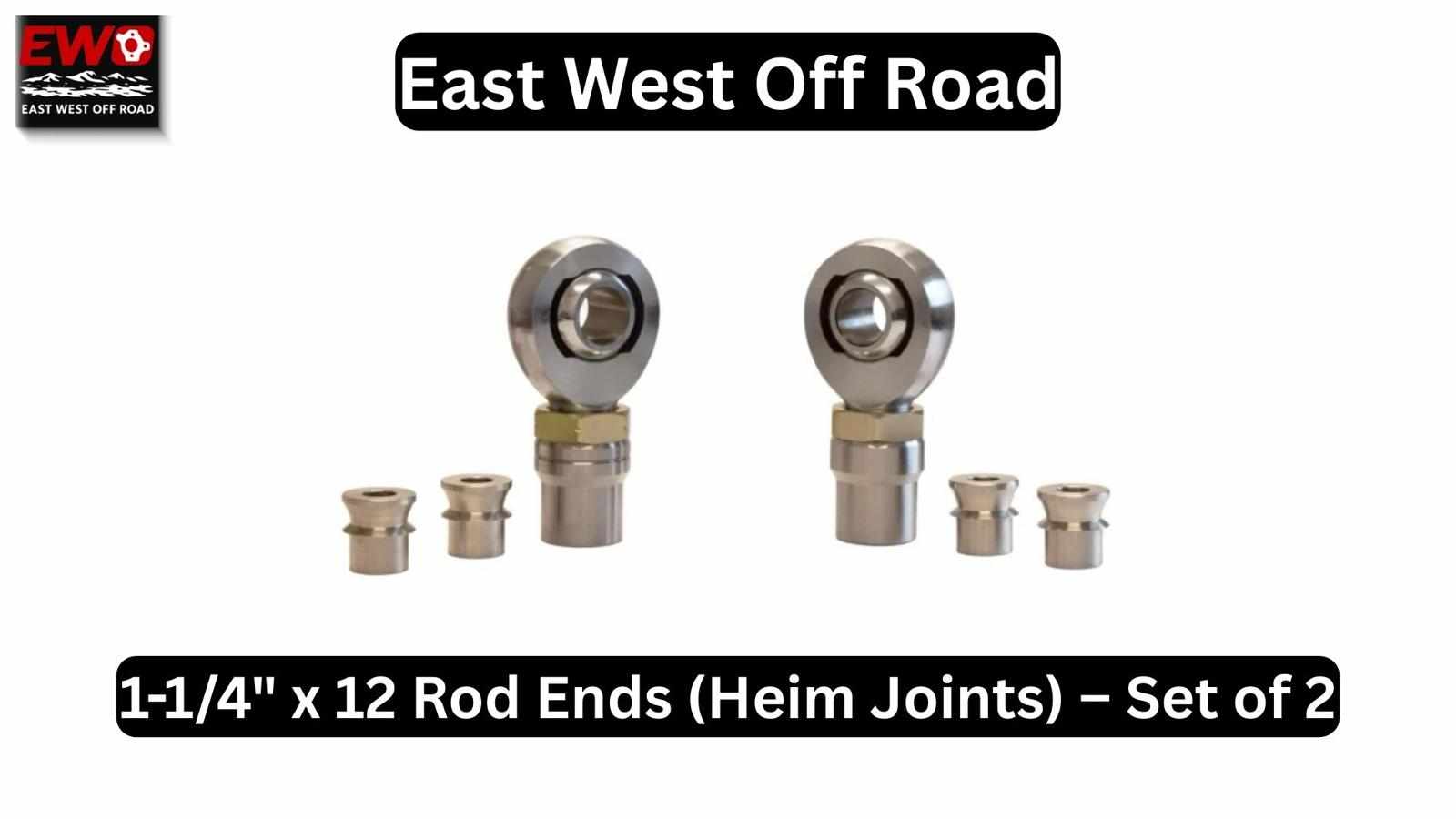
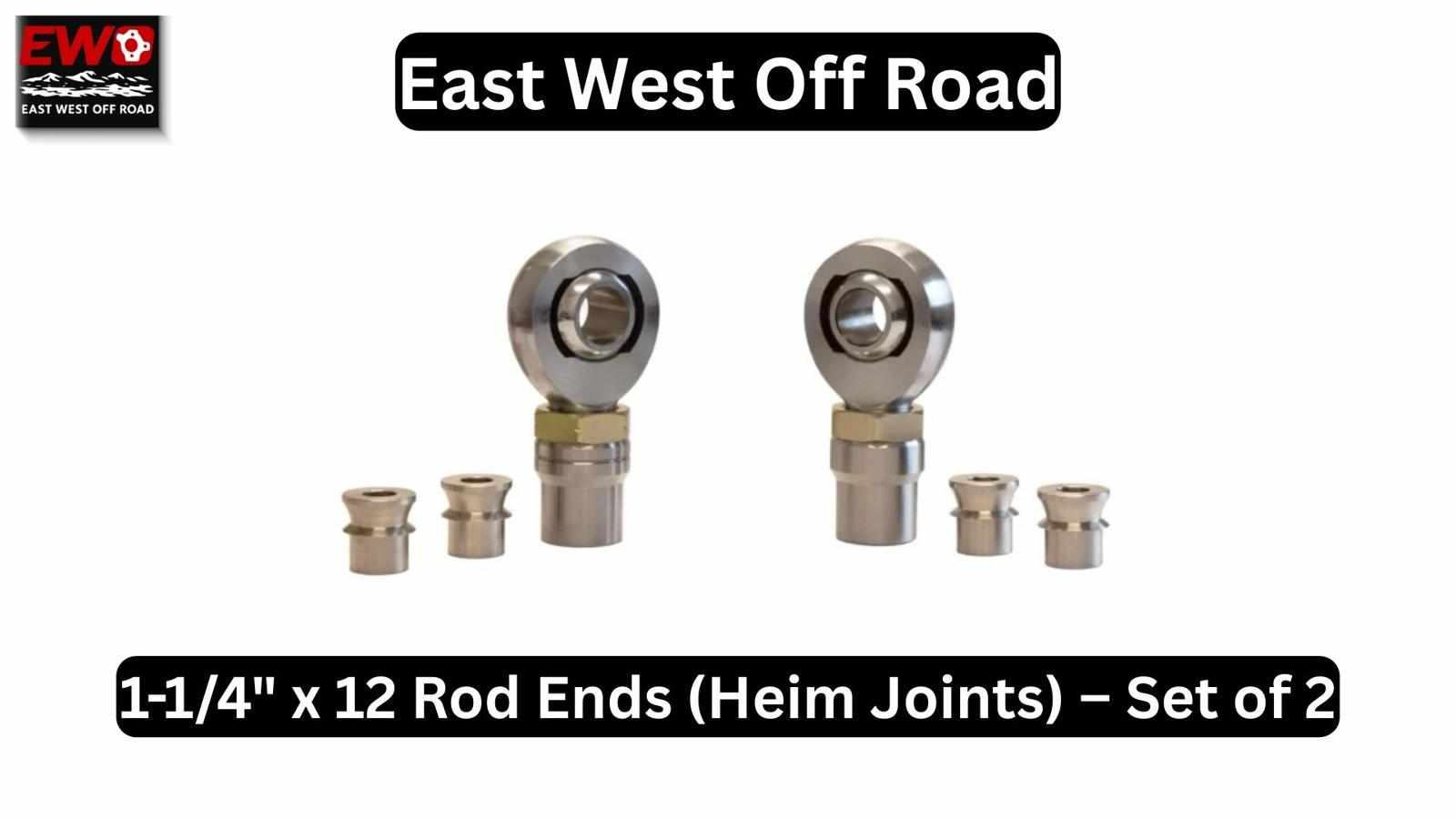
In this comprehensive buyer's guide, we decode the technical specifications of the (https://www.eastwestoffroad.com/product/1-14%22-x-12-rod-ends-(heim-joints)-set-of-2), explaining why 4130 Chromoly and stainless steel spacers are critical investments for your build.
Decoding Rod End Specifications: Size, Thread, and Load Ratings
When you look at a rod end kit, the numbers tell a story of strength. The specification 1-1/4" x 12 refers to a 1.25-inch shank diameter with 12 threads per inch. This 1.25-12 UNF thread (Unified Fine) is preferred over coarse threads because it provides a larger tensile stress area, making the shank significantly stronger under tension.
Why the 1.25" Shank is Critical
For lower suspension links that drag over rocks, the shank size is your primary defense against bending. A rod end 1.25 shank 1 inch bore offers a massive cross-sectional area compared to smaller 7/8" joints.
Load Capacity: A true heavy-duty rod end in this class boasts a 76000 lb static load heim rating. This radial load capacity rod end ensures that the joint can withstand the immense shock loads generated when a 6,000lb vehicle lands a jump or crashes into a ledge.
Material Matters: Chromoly, Kevlar, and Steel
The difference between a "budget" joint and a performance part lies in the metallurgy.
4130 Chromoly vs. Mild Steel
You should always demand 4130 Chromoly rod ends. The EWO 1-1/4 rod ends (Item E63001 heim joint) are forged from this alloy and then processed as heat treated heim joints. This heat treatment creates a hard, durable outer shell that resists stretching, ensuring the structural rod end maintains its shape even after years of abuse.
The Ball: The internal pivot is made from 52100 bearing steel, which is hardened and polished rod end chrome plated for minimal friction.
The Teflon Kevlar Advantage
Old-school joints used metal-on-metal designs that required constant grease and rattled incessantly. The modern standard is the Teflon Kevlar liner rod end. By bonding a TEFLON KEVLAR liner (PTFE) between the race and the ball, manufacturers create a self lubricating rod end.
Longevity: This PTFE lined heim joint is effectively a maintenance free heim. Grease actually attracts dirt, which acts as sandpaper. These liners run dry and clean.
Comfort: The liner acts as a vibration isolator, creating quiet rod ends that solve the squeaky suspension joints often found in daily driven off-roaders.
Complete Kit Components: Adapters and Spacers
A 1.25 Heim Joint Kit is a system. To install it, you need compatible hardware.
The Critical Role of Stainless Steel Spacers
To maximize articulation, you need misalignment spacers. These reduce the 1 inch bore rod end to your bolt size (usually 9/16" or 5/8") and space the body away from the bracket.
Avoid Rust: Many kits come with cheap zinc-plated spacers that rust quickly. You should always insist on Stainless steel misalignment spacers. EWO provides stainless high misalignment options including 1"-9/16" Stainless Steel Spacers, 1"-5/8" Stainless Steel Spacers, and 1"-3/4" Stainless Steel Spacers.
Selecting the Right Tube Adapters
To mount the joint to your DOM tube, you need tube adapters (weld bungs). These are machined from 1045 steel for superior weldability.
Fitment: The standard for 1.25" joints is a 1.5 ID tube adapter, designed for 2.00" OD tubing with a 0.250" wall.
Styles: You can choose a Hex tube adapter 1.5 inch for easy wrenching or a Round tube adapter 1.5 inch for a flush look. EWO also offers a 1.25" Half Set Tube Adapter or short weld bung for tight spaces.
Real-World Applications: Steering and Suspension
Where is this hardware used?
1. Crossover Steering
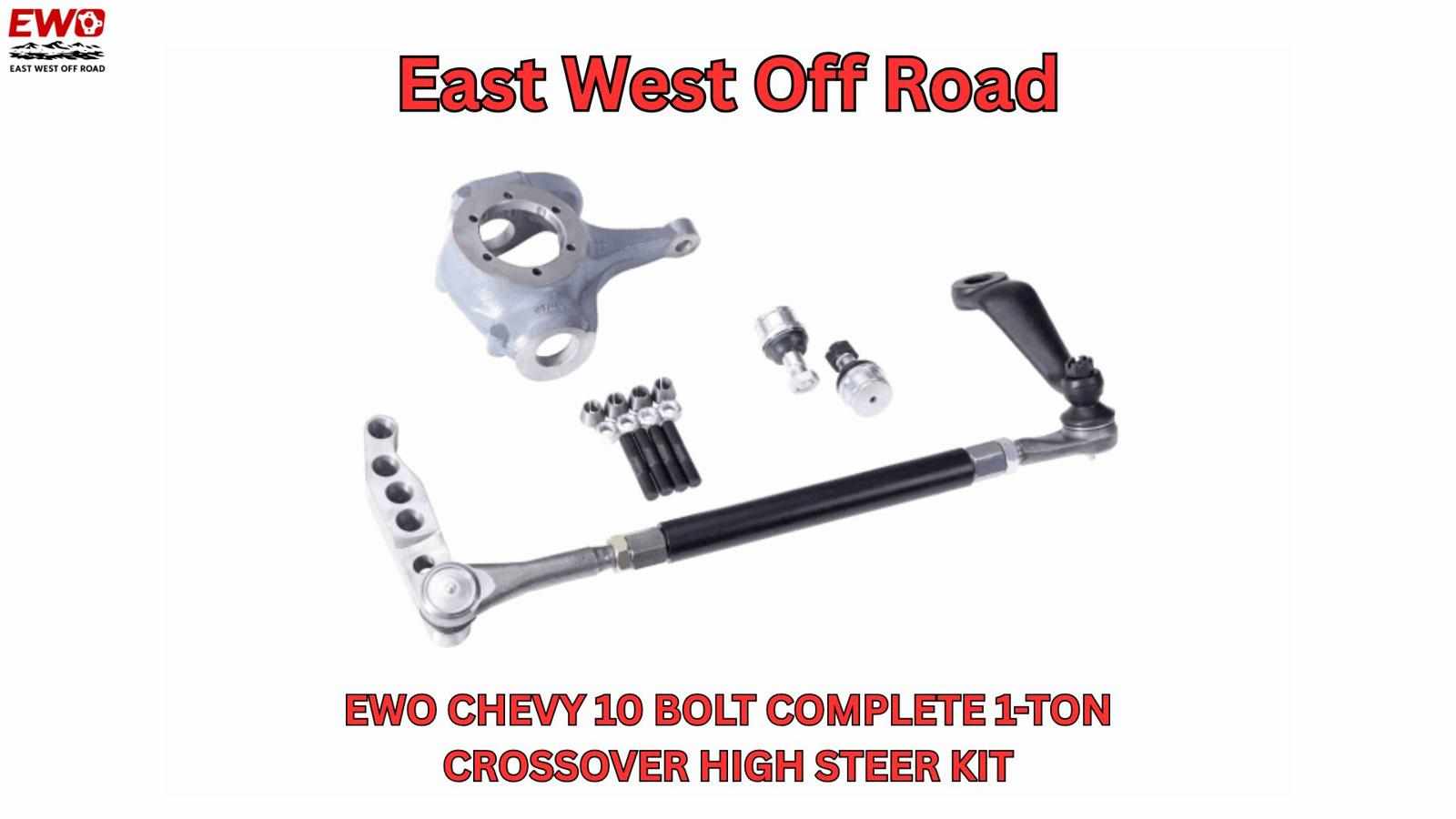
For a Jeep one ton swap steering project, stock parts are insufficient. A 1 ton steering upgrade using 1 1/4" Heim joint ends creates a crossover steering kit that eliminates slop and resists bending. This is the preferred setup for hydraulic steering heims.
2. Triangulated 4-Link Systems
In a 3 link suspension fabrication or rear 4-link, these joints provide the ultimate adjustability.
Solving Problems: These rigid joints are the ultimate suspension binding fix and can help fix death wobble Jeep JK issues by replacing worn track bar bushings with a zero-deflection tie rod end replacement.
Installation and Maintenance Tips
To ensure your 1 1/4-12 LH and RH rod ends perform flawlessly:
Jam Nut Torque: The number one cause of thread failure is a loose nut. Use a massive jam nut wrench or pipe wrench to keep jam nuts tight.
Welding: When installing tube inserts for DOM tubing, always remove the heim joint first! The heat will melt the Teflon liner.
Cleaning: Cleaning rod ends is simple—wash them with water. Greasing heim joints is generally prohibited for Teflon liners. Use a dry PTFE spray for teflon liner care.
Conclusion
Whether you are comparing Barnes 4WD vs EWO, RuffStuff heim joints vs EWO, or TMR Customs lifetime heims, the specs don't lie. The (https://www.eastwestoffroad.com/product/1-14%22-x-12-rod-ends-(heim-joints)-set-of-2) offers the 4130 Chromoly construction, 76,000 lb strength, and stainless steel spacers required for a professional-grade build.
Don't compromise your 14 bolt truss link mount or Dana 60 steering kit with inferior hardware. Join the EWO ARMY and build with confidence.

Write a comment ...